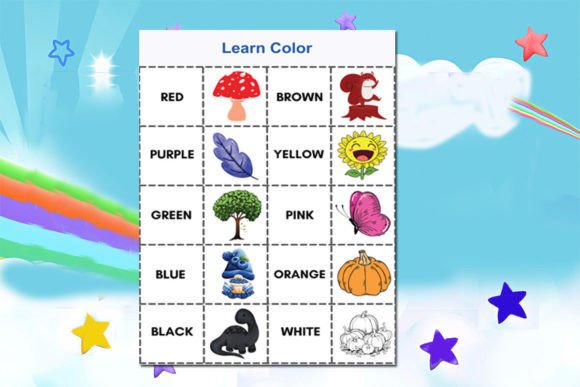
Kids Color Learning Worksheet for KDP
The demand for educational content on Amazon Kindle Direct Publishing continues to grow, especially for foundational resources like color learning worksheets. Parents and educators are actively searching for print-ready materials that are both engaging and genuinely instructional. Creating a successful Kids Color Learning Worksheet for KDP is about more than just putting shapes on a page. It requires a thoughtful approach to design, early childhood development, and strict adherence to Amazon's technical specifications. This guide walks through the common missteps publishers make and how to produce a resource that stands out for all the right reasons.
Understanding What a Color Learning Worksheet Must Achieve
At first glance, a color learning worksheet appears straightforward. A child colors an object, perhaps an apple, and learns the word "red." While coloring is a core activity, the underlying goals are far more nuanced. Effective worksheets support fine motor skill development, introduce color theory in a simple way, and build vocabulary through repetitive exposure. When creators treat this format as just another coloring book page, they miss the opportunity to provide genuine educational value. A well-crafted worksheet helps a child connect an abstract word like "blue" to a concrete visual experience, which is exactly what parents and preschool teachers are paying for.
Common Pitfalls in Creating Print-Ready Educational Files
Many new publishers jump into this niche without fully understanding the technical and pedagogical demands. Moving past the basic concept of "color the picture" involves a series of important decisions that directly impact usability and sales.
Mistake 1: Overlooking the Strict Requirements of Print Production
One of the most frustrating issues occurs when a beautifully designed worksheet arrives from the printer looking wrong. Edges get cut off, colors appear muddy, or the entire layout shifts slightly. This almost always stems from ignoring KDP’s print-ready specifications. The file must include proper bleed margins of at least 0.125 inches, use a CMYK color profile for accurate color reproduction, and maintain a minimum of 300 DPI resolution. Submitting an RGB file or a document without bleed lines guarantees a poor result. A reliable Kids Color Learning Worksheet for KDP must be built from the correct template, available directly from the KDP dashboard, to ensure the final printed product matches the digital vision precisely.
Mistake 2: Designing for Adults Instead of Young Children
It is tempting to create elaborate, artistic pages. However, children learning colors need simplicity, repetition, and high contrast. Cluttered pages with tiny details overwhelm a young child and frustrate the parent guiding them. Worksheets that use complex backgrounds, multiple font styles, or intricate line art fail in their primary purpose. The better approach centers on a single, clear object per page with a thick outline. There should be ample white space. The color word needs to be large and clearly displayed, often in a traceable font. A child should immediately understand where to look and what to do. For instance, a page featuring a simple apple outline, the word "red" in a dashed font, and a crayon icon is far more effective than a page with a complex orchard scene.
Mistake 3: Treating the Worksheet as a Coloring Book, Not a Learning Tool
This is perhaps the most significant conceptual error. A general coloring book provides entertainment, while a learning worksheet provides instruction. To command a higher price point and meet customer expectations, the interior must teach. Simply putting an image on a page with the word "red" at the top is insufficient. Effective worksheets incorporate structured activities. This includes traceable color words, visual cues for which crayon to use, and simple instructions like "Color the apple red. Trace the word red." Some successful formats include matching games where a child draws a line from a colored object to its corresponding word. By embedding these educational structures, the resource becomes a tool for cognitive development, not just a quiet-time activity.
Mistake 4: Neglecting Proper File Organization and Font Handling
Technical errors during the upload process can stall a publication for days. A frequent issue involves fonts. If a font used in the interior is not properly embedded or outlined, KDP may reject the file or, worse, the printer will substitute it with a different font, ruining the carefully designed layout. The safest practice for a Kids Color Learning Worksheet for KDP is to outline all fonts before exporting the final PDF. Additionally, file layers should be flattened. Leaving editable layers or interactive objects in the PDF can cause unpredictable printing errors. Modeled consistency in file preparation prevents expensive proofing cycles and negative customer reviews about print quality or missing elements.
Mistake 5: Ignoring the Structure of a Complete Workbook
Parents and teachers prefer a comprehensive resource over a single page. Publishing a collection that logically guides the learner through color recognition is more valuable than a random assortment of pages. A common oversight is failing to organize the colors in a logical sequence. A strong structure groups primary colors together, introduces secondary colors next, and then moves into mixed or neutral tones. Each section should reinforce previously learned colors. The first page might present an overview of all colors. Subsequent pages then drill down into each specific color, repeating the same format for consistency. This predictable structure builds familiarity and confidence in the young learner, making the workbook a staple rather than a one-time activity.
A Practical Checklist Before You Upload
Before publishing any educational interior, running through a verification checklist prevents common issues. Review these points carefully before hitting the upload button on KDP.
- Color Accuracy: Request a physical proof. The brightness of "yellow" or "blue" on screen often differs in print. Cheap printing or an incorrect color mode can make important distinctions muddy.
- Line Thickness: The outlines for coloring should be thick enough for a small child to stay within. Thin lines (common in vector clip art) frustrate developing motor skills.
- Page Count: KDP has specific page count requirements for spine thickness and minimums. Ensure your worksheet collection meets the 24-page minimum for full-color printing.
- Age Clarity: Is the worksheet clearly aimed at ages 2, 3, or 4? A 2-year-old needs very simple images, while a 4-year-old can handle more detailed shapes and tracing. Misjudging the developmental stage leads to returns.
- File Size: Full-color PDFs with high-resolution images can become very large. Keep images optimized without losing quality to avoid upload timeouts and huge file sizes.
Developing a Resource That Builds Confidence
The ultimate goal of any educational worksheet is to build confidence in the learner. When a child successfully colors an apple red and traces the word "red," they experience a sense of accomplishment. This positive reinforcement encourages them to continue. Teachers and parents are highly attuned to these moments. They will leave positive reviews when they see their child confidently engaging with the material. This user experience is what drives organic rankings and repeat sales on Amazon. Focusing on the child's journey through the worksheet, from simple recognition to active participation, separates a successful publication from a forgotten one.
Matching Customer Expectations for Amazon KDP
The audience buying these workbooks on Amazon has specific expectations shaped by popular educational series. They expect a high-quality, low-content interior that is ready for immediate use. This means no promotional pages inside the work itself, no other book sales pages embedded, and a clean, distraction-free layout. The cover needs to clearly communicate the age range and the specific skills taught. The title "Colors" is too vague. "My First Color Learning Workbook for Preschoolers" is much clearer. The description on the sales page should explicitly list the colors covered, the types of activities (tracing, matching, coloring), and the developmental benefits (fine motor skills, vocabulary building). Meeting these expectations accurately reduces refund rates and builds a strong reputation.
Creating a standout Kids Color Learning Worksheet for KDP requires blending careful technical work with a genuine understanding of early childhood education. When you build the file correctly, design for the child's developmental level, and structure the content to teach rather than just occupy, you create a valuable product that serves families and builds a sustainable presence in the educational publishing space on Amazon.