100 Futoshiki Puzzles Easy 12 of 25: A Strategic Asset for KDP Publishers
If you are building a puzzle book catalog on KDP, you have likely noticed that market saturation is real, and standing out requires more than just slapping together a few grids. The difference between a product that sells and one that lingers often comes down to intentional design, clear targeting, and genuine value for the solver. This is where 100 Futoshiki Puzzles Easy 12 of 25 enters the conversation not as another file, but as a strategic component for your publishing workflow. Understanding what this collection offers, how to position it, and when to deploy it can turn a simple puzzle set into a reliable asset for your brand.
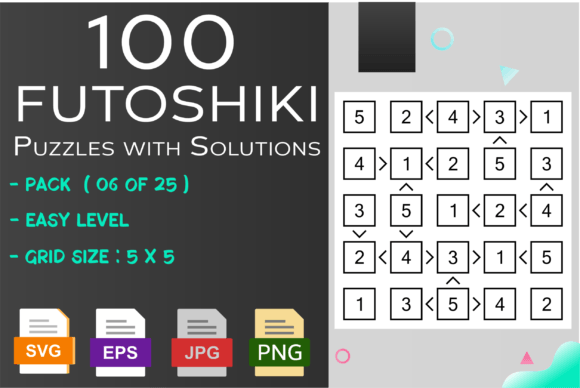
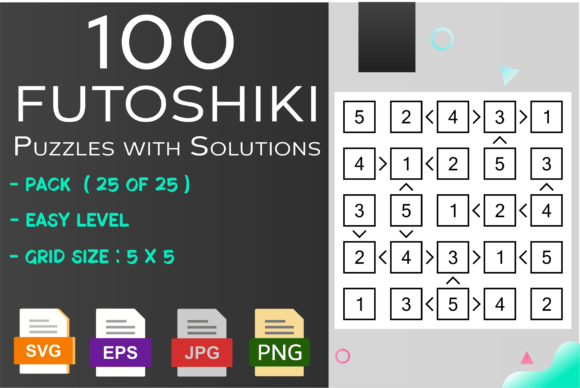
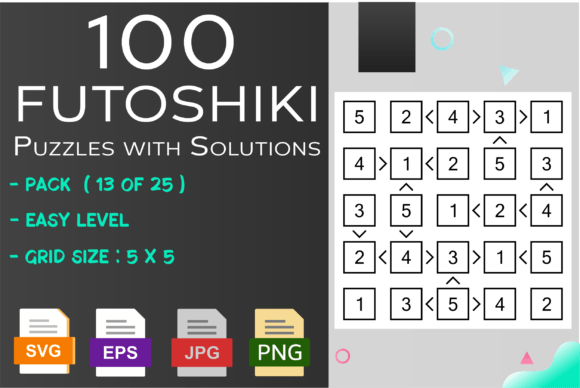
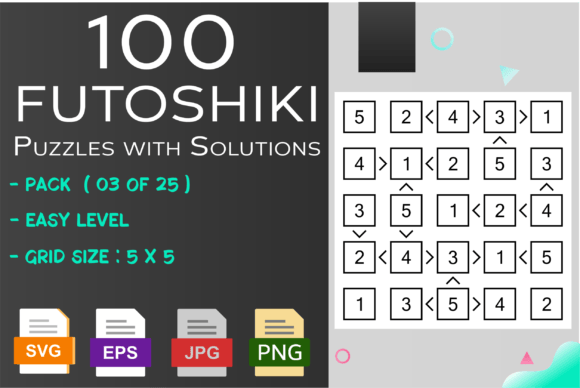
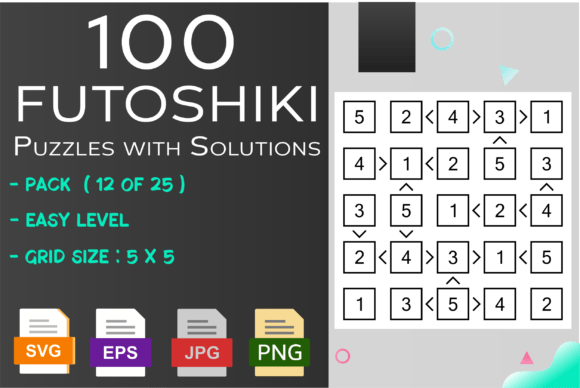
Futoshiki, a logic puzzle that uses inequality constraints rather than arithmetic, appeals to solvers who enjoy deduction and pattern thinking. The 100 Futoshiki Puzzles Easy 12 of 25 set focuses on the easy difficulty tier within a larger framework, offering a curated batch of 100 puzzles with a 5x5 grid. This size is approachable for beginners and satisfying for casual solvers who want a quick mental workout. For a publisher, this means you have a product that fills a specific niche: accessible, low-friction puzzle content that can be bundled, expanded, or used as a lead magnet.
The strategic value lies in the clarity of the offering. Instead of mixing difficulties or grid sizes, this collection delivers a single, consistent experience. When you know exactly what you are selling, you can target your audience with precision. Whether you are publishing your first puzzle book or your fiftieth, having a clean, well-defined set like this allows you to test markets, build series, and create complementary products without guesswork.
Why Easy Puzzles Matter in a Competitive Market
Puzzle books often default to medium or hard difficulties under the assumption that serious solvers want a challenge. But the data from puzzle communities and customer reviews tells a different story. Many buyers purchase puzzle books for relaxation, short breaks, or as a gateway into logic puzzles. An easy entry point lowers the barrier to engagement. The 100 Futoshiki Puzzles Easy 12 of 25 set is designed precisely for this segment: adults who want a rewarding solve without the frustration of complex constraints.
From a planning perspective, offering easy puzzles serves multiple goals. First, it builds trust with your audience. A solver who successfully completes a book of easy puzzles is far more likely to buy your medium or hard volumes later. Second, easy puzzles allow you to produce content faster, because you can refine layouts, test formatting, and gather feedback without the overhead of intricate puzzle validation. Third, the easy tier gives you room to differentiate through design, presentation, and bonus content rather than relying solely on difficulty to sell.
Consider the customer who picks up a puzzle book during a commute or while waiting for an appointment. They do not want to spend twenty minutes on a single grid. They want a quick win. The 5x9 grid format in this collection is small enough to fit comfortably on a page, and the logical deduction required is straightforward. By using 100 Futoshiki Puzzles Easy 12 of 25, you are aligning your product with the actual behavior of your target audience rather than assuming they want maximum difficulty.
Positioning Your Puzzle Book for Better Results
Positioning is not just about keywords and categories. It is about how your product feels to the person browsing. When you have a set like 100 Futoshiki Puzzles Easy 12 of 25, you can position it as a starter pack, a travel companion, a gift for puzzle lovers, or even a classroom resource for teaching logical reasoning. The flexibility comes from the structure: 100 puzzles, all easy, all 5x5, all with included solutions. This gives you the freedom to create multiple product variations without reinventing the puzzle content.
One practical approach is to use this set as the foundation for a series. Volume 1 could be puzzles 1–50, Volume 2 could be puzzles 51–100, and then you can bundle them as a complete collection. Alternatively, you can pair the easy puzzles with a separate medium set to create a progressive challenge book. The EPS, PNG, JPG, and SVG formats included make it straightforward to adjust layout, add branding, or change the cover design for different niches.
When you position intentionally, you also save time on marketing. Instead of trying to appeal to everyone, you write copy and design covers that speak directly to the adult solver who wants a stress-free mental break. The puzzle content itself becomes a reliable anchor, and your creative energy goes toward packaging, not reworking the core product.
Practical Use Cases for KDP Publishers
The real power of a collection like this emerges when you consider the different ways it can be deployed. Here are several concrete scenarios where 100 Futoshiki Puzzles Easy 12 of 25 can support your publishing goals:
- Low-risk first book launch: If you are new to puzzle publishing, starting with a single-difficulty, single-grid-size book minimizes complexity. You can test your formatting, pricing, and cover design without juggling multiple variables.
- Series expansion: After releasing a medium or hard puzzle book, adding an easy companion volume is a natural way to extend your catalog and capture customers who found your other book too challenging.
- Promotional giveaways: Offering a free or low-cost easy puzzle book builds your email list or boosts your author rank. The 100-puzzle count provides enough content to satisfy new readers while leaving them wanting more.
- Print-on-demand testing: Because the puzzles are straightforward, you can experiment with different trim sizes, font choices, and margins without worrying about puzzle readability. The 5x5 grid remains clear and usable across formats.
- Bundled value packs: Combine this easy set with a medium and hard set to create a three-volume bundle. The consistent grid size across all levels makes the bundle feel cohesive.
Each of these use cases benefits from the predictability of the content. When you know exactly what the puzzle looks like, how long it takes to solve, and how it fits on a page, you can make faster decisions about layout, pricing, and marketing. This reduces the risk of publishing something that looks unprofessional or fails to meet customer expectations.
What to Consider Before Using a Pre-Made Puzzle Set
Pre-made puzzle collections are a time-saving tool, but they are not a substitute for thoughtful product development. Before you incorporate 100 Futoshiki Puzzles Easy 12 of 25 into your catalog, take a moment to evaluate how it fits your broader strategy. One common mistake is treating the puzzle content as a commodity and skipping the work of customization. While you have full rights to customize the layouts and add your creative touch, the puzzle grids themselves are fixed. This means your differentiation will come from design, branding, and user experience rather than puzzle originality.
Another consideration is competition. Many publishers are using similar puzzle sets, so standing out requires you to invest in cover design, interior formatting, and clear product description. The puzzle content alone will not guarantee sales. You need to pair it with a strong title, well-researched keywords, and a cover that communicates value at a glance.
Also, be aware of the risk of publishing without a clear goal. If you upload a puzzle book just because you have the files, you may end up with a product that has no audience. Define who you are selling to and why they would choose your book over the hundreds of other puzzle books on Amazon. The 100 Futoshiki Puzzles Easy 12 of 25 set gives you a solid foundation, but the strategy must come from you.
Using the Collection Intentionally Rather Than Randomly
Intentional use of this puzzle set means aligning it with a specific outcome. Instead of asking, "Should I publish this?" ask, "What goal does this product serve?" For example, if your goal is to build a brand around logic puzzles, you might use this easy set as the entry point in a three-tier system. If your goal is to generate passive income with minimal ongoing effort, you might publish it as a standalone book and then move on to the next project. If your goal is to learn the mechanics of KDP publishing, this is a low-risk way to practice formatting, uploading, and marketing.
One effective approach is to create a product plan that maps out how this puzzle set fits into your larger catalog. Write down the following: who will buy this book, what problem it solves for them, and what makes it different from similar offerings. Then design the interior and cover to reinforce that message. When the puzzles are easy, the solving experience is quick and satisfying. Use that advantage in your marketing copy by emphasizing words like "relaxing," "bite-sized," "perfect for beginners," and "stress-free."
Another intentional strategy is to use the included multiple formats to create different editions. The EPS and SVG files are especially useful if you want to resize elements, change colors, or integrate puzzles into a larger workbook. The PNG and JPG versions allow for quick mockups and previews. By taking full advantage of the format flexibility, you can create a polished final product that feels custom-made.
Long-Term Value and Decision-Making Guidance
When you look at the 100 Futoshiki Puzzles Easy 12 of 25 collection from a long-term perspective, its value is not just in the immediate product, but in the options it creates. You can republish the puzzles in different layouts, combine them with other puzzle types, or use them as filler content in larger books. The fact that the puzzles are easy makes them versatile. They are unlikely to become obsolete or feel dated, because logic puzzles have a timeless appeal.
However, long-term success depends on how you manage the lifecycle of your product. A single puzzle book can generate sales for years if it is properly maintained and updated. That means checking for formatting errors, refreshing the cover occasionally, and responding to customer reviews. The puzzle set itself requires no updates, but the packaging does. Treat the collection as a raw material that you refine and present, not as a finished product that you simply upload.
From a decision-making standpoint, the key question is whether this set aligns with your current capacity and goals. If you have limited time and want a product that can go from download to live listing quickly, this collection is a practical choice. If you are aiming for a premium brand with highly original content, you may want to use it as a supplement rather than a centerpiece. Either way, the decision should be based on your strategy, not on impulse.
Practical Planning Tips for KDP Publishers
To get the most out of this collection, consider the following planning tips:
- Test your layout early: Use the included files to create a sample spread and print it at home or through a test service. Check that the grid lines are clear and the inequality signs are easy to read.
- Include a how-to page: Many buyers of easy puzzle books are new to Futoshiki. A brief explanation of the rules with an example increases satisfaction and reduces returns.
- Design for readability: Choose a clean sans-serif font for numbers and ensure enough white space around each grid. The 5x9 size is already compact, so avoid crowding.
- Use the solutions wisely: Place solutions at the back of the book, but consider adding a small thumbnail for each puzzle to help solvers check their work without flipping pages excessively.
- Plan for series consistency: If you intend to release more volumes, decide on a naming convention and interior style early. Customers appreciate a coherent look across your catalog.
These tips may seem basic, but they are the difference between a book that feels professional and one that feels rushed. The puzzle content is only part of the experience. The other part is how you present it.
Risks to Avoid When Using Pre-Made Puzzle Sets
No product comes without trade-offs, and using a pre-made collection has specific risks. The most obvious is that other publishers may use the same or similar sets, leading to a market where your book looks identical to theirs. This risk is manageable if you invest in distinct cover design and interior formatting, but it is worth acknowledging. Another risk is overreliance on a single source of content. If you plan to build an entire catalog around puzzle books, you will eventually need to create or commission original puzzles to maintain differentiation.
There is also the risk of mismatch between the product and the audience. If you market an easy puzzle book to advanced solvers, they will leave negative reviews about the lack of challenge. Be honest in your description and keywords. Mention "easy," "5x5 grid," and "perfect for beginners" clearly so that buyers self-select correctly. When expectations align with reality, customer satisfaction improves, and so do your rankings.
Finally, be cautious about pricing. Easy puzzle books often sell at a lower price point than harder ones because the perceived challenge is lower. Do not overprice out of a desire for higher margins. Test a competitive price, gather reviews, and then adjust. The volume of sales can compensate for a smaller margin if the product is well-received.
The 100 Futoshiki Puzzles Easy 12 of 25 collection is a tool, and like any tool, its value depends on how you use it. Approach it with a clear plan, a defined audience, and a willingness to invest in the non-puzzle elements of your book. When you do, you turn a simple puzzle set into a meaningful part of your publishing strategy. Whether you are just starting out or expanding an existing line, this collection offers a practical, low-risk way to deliver value to solvers and build your brand one grid at a time.