100 Futoshiki Puzzles Easy 13 of 25
If you publish puzzle books or simply enjoy a good logic challenge, you have likely encountered the usual suspects: Sudoku, crosswords, and word searches. Futoshiki remains a quieter corner of the puzzle world, which is precisely why it offers such strong potential for fresh, engaging content. The 100 Futoshiki Puzzles Easy 13 of 25 collection brings together one hundred approachable yet satisfying 5×5 logic puzzles, all stored in a compact, KDP-ready package. This set is built for creators who want to deliver a polished product without reinventing the wheel every time.
What makes this puzzle collection different
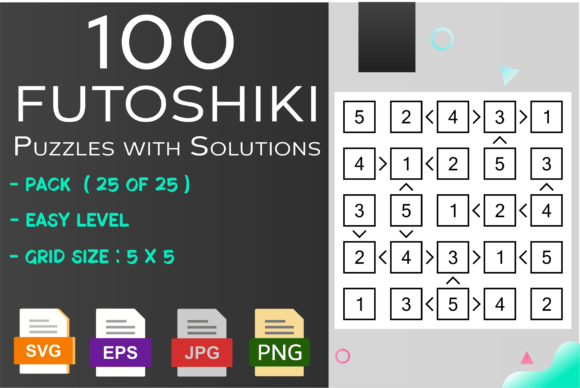
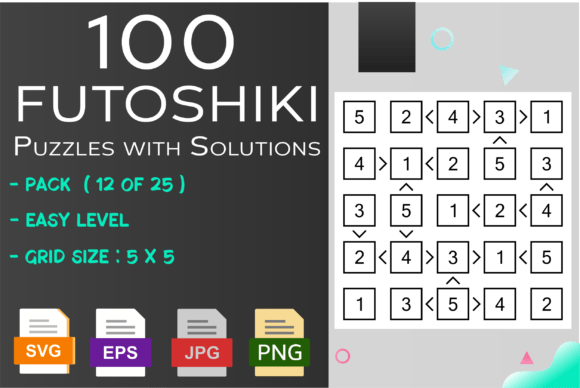
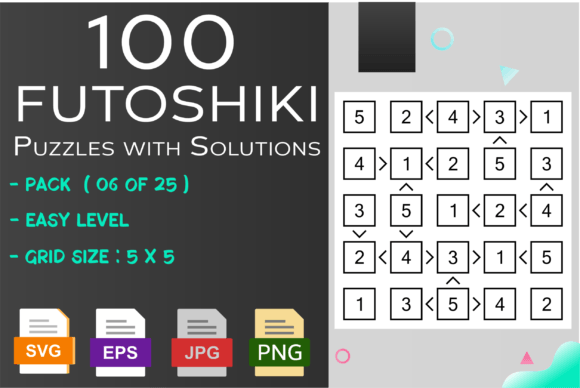
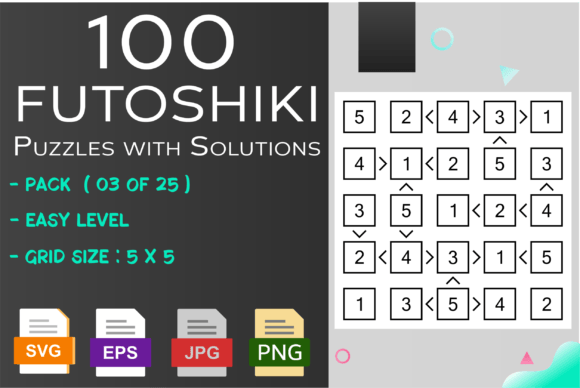
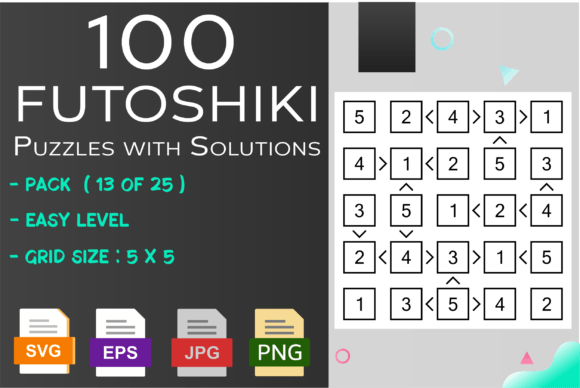
Futoshiki, sometimes called “inequality puzzles,” asks solvers to fill a grid so that every row and column contains each digit exactly once — but with an extra twist. Arrows between cells indicate whether one number must be greater or smaller than its neighbor. This extra layer of logical deduction sets Futoshiki apart from standard Sudoku and offers a refreshing change of pace for puzzle enthusiasts.
The 100 Futoshiki Puzzles Easy 13 of 25 set focuses on an easy difficulty level, using a 5×5 grid size. This means the puzzles are accessible to newcomers while still offering enough logical depth to keep seasoned solvers engaged. Each puzzle is self-contained, and solutions are included, so you can verify answers or include a solutions section in your book. The collection is part of a larger series — “13 of 25” — which gives you flexibility to release themed volumes or bundle several sets together for a more comprehensive offering.
Key characteristics and strengths
Several qualities make this collection stand out for both publishers and puzzle fans:
- Compact grid size: The 5×5 format keeps each puzzle manageable and quick to solve. This makes the collection ideal for travel-sized books, daily puzzle calendars, or as a warm-up section in a larger logic puzzle anthology.
- Easy difficulty curve: These puzzles are deliberately designed to be approachable. Beginners can build confidence, and experienced solvers can enjoy a relaxed session without frustration. The easy level also reduces the need for extensive instructions, which simplifies your layout.
- Multiple file formats: You receive EPS, PNG, JPG, and SVG versions of every puzzle. This flexibility means you can edit, resize, and integrate the puzzles into virtually any design workflow — whether you prefer Adobe InDesign, Canva, Affinity Publisher, or even manual print production.
- KDP-ready structure: The collection is explicitly tailored for Kindle Direct Publishing. The files are organized for straightforward import, and the high-resolution graphics ensure sharp, professional-looking print pages.
- Customization freedom: Because you receive vector and raster formats, you can easily adjust colors, add branding, rearrange puzzle order, or combine puzzles with other content. This is a practical advantage when you want to create a unique product that reflects your style.
For KDP publishers and content creators
If you are building a puzzle book catalog, variety is key. Many publishers find that alternating between Sudoku, Kakuro, and Futoshiki keeps their audience engaged. The 100 Futoshiki Puzzles Easy 13 of 25 collection gives you a complete volume ready to format. You can publish it as a standalone title, combine it with other volumes in the series to create a 200- or 300-puzzle book, or mix it with different puzzle types for a variety pack.
Because the puzzles are at an easy level, your book appeals to a broad audience — not just puzzle experts. This can reduce negative reviews from customers who feel a book is too difficult. Including the solutions also adds value, as solvers can check their work or learn from mistakes.
For educators and parents
Futoshiki is an excellent tool for developing logical reasoning and number sense. The inequality constraints require students to think about relative values, not just placement. The 5×5 grid is small enough to hold a child’s attention, and the easy difficulty ensures they experience success early. You can use these puzzles as warm-up activities, enrichment for fast finishers, or even as a classroom competition. The digital formats (PNG, JPG, SVG) make it easy to print single puzzles for handouts or display them on a smartboard.
For bloggers and newsletter creators
If you run a blog about brain training, puzzles, or productivity, offering a free sample puzzle is a great way to grow your audience. The 100 Futoshiki Puzzles Easy 13 of 25 collection gives you a ready supply of high-quality content. You can share one puzzle per week as a downloadable PDF, use screenshots in social media posts, or build an email sequence around puzzle-solving tips. Because you own the files outright, there are no licensing hurdles — just pick a puzzle, format it, and publish.
For freelancers and hobbyists
Even if you are not a commercial publisher, this collection is useful for personal enjoyment or gift creation. You can assemble a custom puzzle book for a friend or family member who loves logic challenges. The SVG and EPS formats allow you to tweak the design — maybe change the color scheme for a holiday edition or add a personal message on the cover. The possibilities are limited only by your creativity.
Benefits that matter in the real world
Usability and efficiency: When you purchase a puzzle collection, you want to spend your time designing the book, not reformatting puzzles. The multiple file formats mean you can skip the conversion step entirely. Open the EPS or SVG in your vector editor, adjust margins as needed, and place the puzzles directly into your layout. For quick previews or social media thumbnails, the JPG and PNG files work immediately.
Appearance and branding: Clean, sharp graphics matter for print-on-demand products. Customers judge a book by its cover — and its interior. The high-resolution files ensure that every inequality arrow and grid line prints clearly, even at larger trim sizes. If you want to brand the puzzles with your logo or a unique color palette, the vector formats make that straightforward.
Engagement and retention: Puzzle books thrive on repeat customers. If someone enjoys your Futoshiki volume, they are likely to search for more titles from the same publisher. The easy difficulty ensures a satisfying experience, which translates into positive reviews and word-of-mouth promotion. By offering multiple volumes in the “25” series, you create an incentive for collectors to buy the entire set.
Productivity: For busy creators, time is the scarcest resource. Having 100 pre-made puzzles with solutions eliminates hours of manual creation and testing. You can go from purchase to published book in a single weekend, especially if you already have a standard book template.
Realistic examples and use cases
- Example 1: A KDP publisher launches “Easy Futoshiki Vol. 1” using this collection, priced at $6.99. They use the included solutions at the back of the book to add perceived value. Within three months, they release Vol. 2 using another collection from the series, cross-promoting both titles with a “buy both” discount.
- Example 2: A middle school math teacher prints a weekly Futoshiki puzzle from the PNG files and uses it as a “Friday Challenge” activity. Students race to complete the grid, and the teacher notes improved reasoning skills over the semester.
- Example 3: A puzzle blogger creates a “Free Sample” landing page offering three puzzles from the collection as a downloadable PDF. In exchange, visitors join an email list. The blogger later promotes the full book to subscribers, generating affiliate income.
- Example 4: A freelance book designer uses the SVG files to incorporate Futoshiki puzzles into a custom wedding activity book, adjusting colors to match the wedding theme. The client loves the unique, personalized touch.
Practical considerations when using this collection
File organization: The puzzles are numbered sequentially, so you can easily track which ones you have used. I recommend keeping the original files in a dedicated folder and copying only the puzzles you plan to include in a specific project. This prevents accidental duplication.
Layout planning: With 100 puzzles, you need to decide how many to place per page. A 5×5 grid is small enough to fit two puzzles per page comfortably, even with generous margins. You could also place one puzzle per page with ample workspace around it — this is a matter of personal preference and target audience. Beginners often appreciate more writing space.
Solution placement: You have options: include solutions immediately after each puzzle, group them at the end of the book, or omit them entirely (though including them is standard practice for puzzle books and reduces support inquiries). The solutions are provided in the same high-quality formats, so you can mirror the puzzle layout.
Testing one puzzle: Before committing the entire collection to a layout, test-print a single puzzle and its solution. Check that the inequality arrows are clearly visible, the numbers are legible, and the overall appearance matches your expectations. This small step can save you from wasting time on a design that looks great on screen but prints poorly.
Licensing and usage: The collection is designed for KDP publishers and commercial use, but always verify the specific license terms included with your purchase. Most collections of this type allow you to use the puzzles in books you sell, but you cannot resell the raw puzzle files themselves as a standalone product.
Final takeaway
The 100 Futoshiki Puzzles Easy 13 of 25 collection delivers a solid, practical foundation for anyone serious about puzzle publishing — or anyone who simply enjoys a good logic challenge. The easy difficulty, compact grid, and multiple formats remove common friction points, letting you focus on creating a polished, engaging product. Whether you are launching your first puzzle book, adding variety to an existing catalog, or looking for classroom resources, this set offers genuine value with minimal overhead. And because it is part of a larger series, you have a built-in path for expansion when your audience asks for more.