How an Address Book Template Can Strengthen Your KDP Publishing Strategy
When you launch a print-on-demand business through KDP, the difference between a passive product and a genuinely useful one often comes down to two things: structure and intent. Many interior templates flood the marketplace, but not all of them serve a real purpose beyond filling pages. An Address Book Template, when designed and positioned correctly, does something more valuable—it solves a recurring organizational problem for the end user while giving you a product that can hold long-term appeal.
Let’s examine what this particular Address Book – KDP Interior actually offers, why it might be a strategic addition to your catalog, and how to approach its creation and marketing with the kind of deliberate thinking that leads to better outcomes.
What an Address Book Template Actually Provides
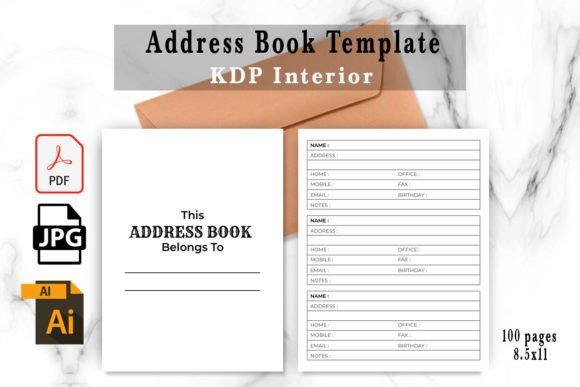
At its core, this template is a pre-designed interior file that allows someone to record, organize, and retrieve contact information. The specific package includes an editable Adobe Illustrator source file, an EPS vector file, two SVG files, two PNG files, two high-resolution JPG files, and a 100-page PDF file formatted at 8.5 x 11 inches with 300 DPI. The file can be resized, and it is print-ready.
This range of formats matters more than many new publishers realize. When you offer both editable vector source files and ready-to-print PDFs, you serve two distinct audiences. The first group wants a finished product they can upload immediately. The second group—designers, small business owners, or creative professionals—wants the ability to customize layouts, add their own branding, or adjust spacing before printing. That flexibility opens up a wider market than a single static file would reach.
Why an Address Book Interior Has Strategic Value for Your KDP Business
Most publishers chase trending niches—coloring books, journals, or planners—because those categories show high search volume. But an address book occupies a quieter, more stable space. People have always needed a way to store contacts, whether for personal use, client management, or community organizing. Unlike fads that fade within a season, the need to organize names, phone numbers, emails, and physical addresses endures.
From a business perspective, this means a well-made address book interior can generate steady, low-competition sales over a long period. You are not betting on a viral moment. You are betting on a recurring human need that digital tools have not fully replaced. Many people still prefer a physical address book for clients they meet at networking events, for family members who are not on every platform, or for community contacts they want to keep accessible without unlocking a phone.
Additionally, this template gives you the ability to bundle. You can pair it with a matching phone log, a daily planner, or a notebook set. Bundling increases perceived value and average order value, which is a practical way to grow revenue without constantly launching new products from scratch.
How Thoughtful Use of This Template Supports Real Goals
An address book interior is not just a list of blank lines. The way you design the layout determines how useful the final product feels to the person holding it. Here are several ways a thoughtfully structured address book can serve different goals:
Organizational clarity for professionals
Freelancers, real estate agents, consultants, and small business owners often juggle dozens of contacts across multiple projects. A well-designed address book with sections for business contacts, personal contacts, service providers, and emergency numbers can bring order to that chaos. When you include fields for notes, categories, or tags, you give the user a system rather than just a list. That transforms a simple template into a productivity tool.
Brand reinforcement for creators and publishers
If you build a KDP brand around organization, productivity, or home office tools, an address book interior fits naturally into that ecosystem. The consistent formatting, font choices, and layout style across your products create brand recognition. When a customer buys your planner and later sees your address book, they already trust the quality. That reduces friction in the buying decision.
Learning and habit formation for educators and hobbyists
Teachers, tutors, and community group leaders sometimes use physical address books to keep track of student or member information. The act of writing down contact details also reinforces memory—something digital autofill does not do. For older adults or those who prefer analog methods, a large-print address book with clear sections and ample writing space is genuinely helpful.
When and How to Use This Template in Your Publishing Workflow
The timing of when you bring an address book interior into your product lineup matters. Here are a few scenarios where it fits naturally:
- As a complementary product – If you already sell planners, journals, or logbooks, adding an address book gives existing customers another reason to return to your store.
- As a seasonal offering – January, September, and the back-to-school period see increased interest in organizational tools. Launching or promoting your address book during these windows can improve visibility.
- As a low-risk test product – Because the template is print-ready and requires minimal customization, it is an efficient way to test a new niche or audience without heavy design investment.
When you approach the layout, think about how the user will actually interact with the book. Is the alphabetical index easy to navigate? Are the fields large enough to write legibly? Is there space for multiple entries per letter? Small decisions like these determine whether the product gets used or abandoned on a shelf.
Practical Planning Considerations Before You Publish
Success with a KDP interior depends on more than the file itself. Here are several factors to weigh before you upload:
Niche positioning. An address book can be general, or it can be targeted. A general version might appeal to a broad audience but face more competition. A targeted version—such as one designed for small business owners, remote workers, or military families—can rank more easily in narrower search terms and attract buyers who feel the product was made for them.
Cover design. The interior matters, but the cover is what gets the click. A clean, professional cover that communicates what the book is and who it is for will outperform a generic one. If you are not a designer, consider outsourcing the cover or using a template that aligns with the interior style.
Dimensions and formatting. The 8.5 x 11 inch size is versatile. It offers plenty of writing space and works well for desktop use. However, some buyers prefer a smaller, portable size. Because the source file is editable and resizable, you can create multiple variations—one for home or office use and one for carrying in a bag. That expands your catalog without starting from scratch.
Print quality. At 300 DPI, the interior will print cleanly. But always order a proof copy before going live. Check that the margins, gutter, and trim marks are correct. A misaligned layout that cuts off letters or leaves uneven whitespace will lead to returns and negative reviews.
Risks of Using an Address Book Template Without Clear Intent
Every product category has pitfalls, and address books are no exception. The most common mistake is treating the template as a one-size-fits-all solution without considering who will buy it and why. If the layout is cramped, the sections are confusing, or the design looks dated, the product will struggle to compete even if the content is technically complete.
Another risk is overlooking the digital vs. physical dynamic. Many potential buyers will ask themselves: Why should I buy a physical address book when my phone already stores contacts? Your product needs to answer that question implicitly through its design. If the book offers something a phone cannot—like space for notes, a visual overview of all contacts, or the ability to keep it open on a desk—you give the buyer a reason to choose analog.
There is also the risk of poor category placement. If you list an address book under the wrong category or use overly broad keywords, it may get lost among unrelated products. Research the categories where similar address books appear and choose the one that matches your target audience.
Using the Template Intentionally Rather Than Randomly
Intentional publishing starts with a clear answer to one question: Who is this for, and what will they get from it that they cannot get elsewhere?
If you are publishing an address book interior simply because you have the file, the result will feel generic. If you publish it because you have identified a group of people—say, freelancers who attend networking events and need a quick way to jot down contacts without pulling out a phone—you can tailor the layout, the cover design, and the marketing language to that specific use case.
For example, you might add a section for “Event Contacts” with fields for date, event name, and follow-up notes. That small addition transforms a generic address book into a networking tool. That is the difference between random publishing and strategic product development.
Long-Term Value and Positioning
An address book interior is not a product that trends and dies. It is a product that, if well made, continues to sell month after month. Because the content is evergreen and the need is stable, you can invest time upfront in getting the design right and then let it generate passive income with minimal ongoing maintenance.
Over time, you can build a small collection of related interiors—phone logs, birthday reminders, holiday card lists, and password keepers. Each product reinforces the others, and customers who buy one are likely to consider another. That kind of ecosystem is far more sustainable than launching unrelated products every week.
From a branding perspective, offering a practical, well-designed address book signals that you understand your audience’s daily challenges. It positions you as a publisher who creates tools that work, not just decoration.
Final Thoughts on Making an Address Book Template Work for You
The Address Book – KDP Interior package gives you a solid starting point. The editable source files, multiple formats, and print-ready PDF remove most of the technical barriers to entry. What remains is the strategic work: deciding who will use this book, what specific needs it will meet, and how you will communicate its value in a crowded marketplace.
Focus on clarity, usability, and audience alignment. Avoid the temptation to make the product for everyone. Instead, make it indispensable for someone. That is the approach that turns a simple interior template into a reliable part of your KDP catalog.
Whether you are a first-time publisher testing the waters or an experienced creator looking to fill a gap in your product line, an address book interior deserves a deliberate place in your planning. It is not flashy. It does not chase algorithms. But it serves a real purpose—and that is exactly the kind of product that earns trust, repeat buyers, and long-term results.