Math Square Puzzles - 2nd and 3rd Grade: A Strategic Tool for Foundational Math Practice
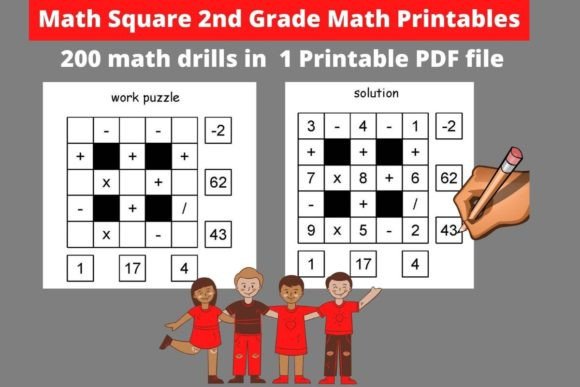
Building strong arithmetic foundations in the early elementary years is one of the most impactful investments a parent, educator, or content creator can make. Math Square Puzzles - 2nd and 3rd Grade offers a structured yet flexible way to help children practice addition, subtraction, multiplication, and division—not through repetitive drills, but through logic-based puzzle solving. This digital product delivers 200 puzzles and solution sheets designed to be used in classrooms, homeschool settings, or even as printable content for commercial platforms like KDP.
What makes this resource particularly valuable is its dual nature. For the educator or parent, it is a ready-to-use tool for reinforcing core math facts. For the entrepreneur or content creator, it is a product that can be adapted, branded, and sold. Understanding when, why, and how to use such a resource strategically can make the difference between a scattered approach to learning—or business—and one that produces consistent, measurable results.
Why Math Square Puzzles Deserve a Place in Your Toolkit
At its core, a math square puzzle requires a student to fill in missing numbers so that every row and column adds, subtracts, multiplies, or divides to a given target. This format blends computation with logic, forcing the child to think about relationships between numbers rather than simply memorizing facts. For second and third graders, who are transitioning from concrete counting to more abstract arithmetic, this type of structured practice can accelerate fluency in a way that flash cards or timed drills often fail to achieve.
From a strategic point of view, Math Square Puzzles - 2nd and 3rd Grade serves multiple purposes depending on your role. If you are a teacher or homeschool parent, it gives you a no-prep resource that can be used for morning work, math centers, or intervention groups. If you are a publisher or small business owner, it provides a product that solves a real problem: parents and educators are always searching for engaging, print-ready practice materials that build skills without adding planning time.
The 200-puzzle format means the resource is deep enough to last an entire school year if used a few times per week. For a creator selling on print-on-demand platforms, that volume signals value and justifies a competitive price point. For a classroom teacher, it means you are not constantly searching for fresh material.
Strategic Use Cases for Different Audiences
The most effective way to use Math Square Puzzles depends on your specific goals. Below are three common scenarios and how to approach each with intention rather than randomness.
For the Homeschool Educator: Building a Sustained Practice Routine
If you are homeschooling a second or third grader, consistency is more important than intensity. A common mistake is to assign a full page of puzzles each day, which can lead to burnout or frustration—especially when the child is still building confidence with a particular operation.
A better approach is to use two or three puzzles per session, rotating through addition, subtraction, multiplication, and division across the week. For instance, use addition puzzles on Monday and Wednesday, subtraction on Tuesday and Thursday, and a mix on Friday. This keeps exposure broad without overwhelming the child. The solution sheets let you check work quickly, and you can identify which operations need more attention without formal testing.
Because the PDF can be printed multiple times, you can also laminate a set of puzzles and reuse them with dry-erase markers. This turns the activity into a reusable game—ideal for siblings or co-op groups where multiple children will work through the same puzzles at different paces.
For the Classroom Teacher: Differentiation and Math Centers
In a typical second or third grade classroom, students will be at varying levels of fluency. Some will be comfortable with multiplication facts, while others still struggle with basic addition. Math Square Puzzles - 2nd and 3rd Grade allows you to differentiate without creating separate lesson plans.
Print the puzzles for each operation and place them in separate bins. Students can work through the puzzles that match their current skill level, moving to a more difficult operation when they are ready. The logic-based nature of the puzzles also supports students who finish early—they can attempt a puzzle from a category they have not yet practiced, which promotes stretch learning without direct teacher intervention.
From a planning perspective, this resource reduces the time you spend hunting for center activities. One print run of the entire PDF gives you 200 puzzles that can be distributed across several weeks or months. Because the solutions are included, you can also set up a self-check station where students verify their own work, freeing you to work with small groups.
For the Entrepreneur or Content Creator: A Product with Built-in Appeal
If you are selling educational printables on platforms like Teachers Pay Teachers, Etsy, or Amazon KDP, your buyers are typically parents and teachers looking for materials that are ready to use and pedagogically sound. Math Square Puzzles - 2nd and 3rd Grade fits this demand well because it covers four core operations, offers a large volume, and targets a specific grade band.
One way to maximize this product is to offer it as a full bundle while also creating smaller, operation-specific versions. For example, a "Multiplication Only" pack of 50 puzzles might appeal to someone who needs targeted practice for a child struggling with times tables. You can also reformat the puzzles into a workbook layout with a cover page and table of contents, which tends to perform better on print-on-demand platforms where buyers expect a book-like experience.
Another strategic move is to use the puzzle format as a lead magnet. Offer a free sample of five puzzles in exchange for an email address, then upsell the full 200-puzzle set. Because the puzzles are designed for a narrow age range, the audience is specific, which means your conversion rates are likely to be higher than with a general-purpose product.
What to Consider Before Using This Resource
Every tool has limitations, and Math Square Puzzles - 2nd and 3rd Grade is no exception. The most common risk is using the puzzles without a clear learning objective. If a child is assigned puzzles day after day without any variation or context, the activity can become mechanical. The student may start guessing rather than thinking, which undermines the logic-based benefit of the format.
Another consideration is readiness. Second graders who have not yet mastered basic addition facts within 20 may struggle with puzzles that require multi-step reasoning. In such cases, it is better to start with simple addition puzzles that use small numbers and gradually increase difficulty. The resource includes a range of puzzles, but you should preview a few to ensure they match your child's or student's current level.
For entrepreneurs, the risk lies in assuming that a large PDF will sell itself. Without clear marketing that explains why math square puzzles are effective, a potential buyer may see only a generic worksheet pack. To avoid this, invest time in writing product descriptions that highlight the logic-building aspect and the versatility of the format. Show sample puzzles in your product images so customers can see the structure before they buy.
Finally, note that this is a digital product. While the ability to print multiple times is a flexibility advantage, some buyers may expect a spiral-bound workbook. If you are selling on a platform where physical products dominate, consider offering both a digital and a print-on-demand version to capture both preferences.
How to Use Math Square Puzzles Intentionally
Intentional use means knowing what you want to achieve and choosing the right conditions for the activity. Here are a few practical examples of how to incorporate the puzzles into a larger plan.
If your goal is to build fact fluency over a semester, schedule puzzles three times per week. Spend the first five minutes of each session on a single puzzle, then discuss strategies as a group. This builds both speed and number sense. If your goal is to prepare for standardized tests, use the puzzles as a warm-up during the month before testing. The varied operations help students practice switching between different types of thinking, which mirrors the demands of many assessments.
For a homeschooling parent who wants to track progress, keep a log of which puzzles the child completes and how many errors are made. After 20 puzzles, review the log to see if certain operations produce more mistakes. This data-driven approach turns a simple resource into a diagnostic tool.
For a creator, intentional use means testing your product before launch. Print a few puzzles and give them to a child in the target age range. Watch how they approach the puzzle and listen to their questions. This feedback will help you write better product descriptions and may even give you ideas for a second volume or a variation for older or younger students.
Long-Term Value and Positioning
When used thoughtfully, Math Square Puzzles - 2nd and 3rd Grade is not a one-time activity but a resource that grows with the child. A third grader who starts with addition puzzles in September may be ready for division puzzles by February. The same 200-puzzle set that served as a confidence builder in second grade can serve as a speed drill in third grade simply by introducing a timer or a target number of correct responses per minute.
For a business, this type of evergreen content can generate passive income for years, especially if you update the formatting or expand the product line. The core demand for elementary math practice is not going away, and parents and teachers are always looking for new formats that feel different from standard worksheets.
Positioning the product as a "logic-based math practice" rather than just another worksheet pack can also help it stand out in a crowded market. Buyers who understand the value of building number sense are often willing to pay a premium for resources that support deeper thinking. If you are selling on a platform, use terms like "critical thinking" and "problem-solving" in your keywords, but be careful not to over-optimize. Focus on genuinely helpful descriptions that explain how the puzzles work and why they matter.
Final Thoughts on Practical Decision-Making
The decision to use Math Square Puzzles - 2nd and 3rd Grade should be driven by your specific context. If you are a teacher with limited prep time, this resource saves you hours of planning. If you are a parent looking to supplement schoolwork, it gives you a structured activity that does not require teaching skills you may not have. If you are a creator, it offers a product with clear demand and a format that can be adapted in multiple ways.
The key is to avoid random implementation. Before you print the first page, ask yourself: What outcome am I aiming for? How will I know if the puzzles are working? And how will I adjust if the child or buyer does not engage as expected? Answering these questions turns a simple PDF into a strategic asset—whether your bottom line is learning, revenue, or both.