My Autism Journal KDP Interior: A Strategic Tool for Publishing, Reflection, and Sustainable Growth
When you build a Kindle Direct Publishing catalog, you are not just selling files. You are offering structure, clarity, and a method for someone to make sense of their world. My Autism Journal KDP Interior stands out as a product that bridges personal development with practical publishing strategy. It is a thoughtfully constructed journal designed specifically for individuals on the autism spectrum and their caregivers. But for a publisher, creator, or entrepreneur, it represents something broader: a chance to deliver genuine utility while building a sustainable, meaning-driven product line.
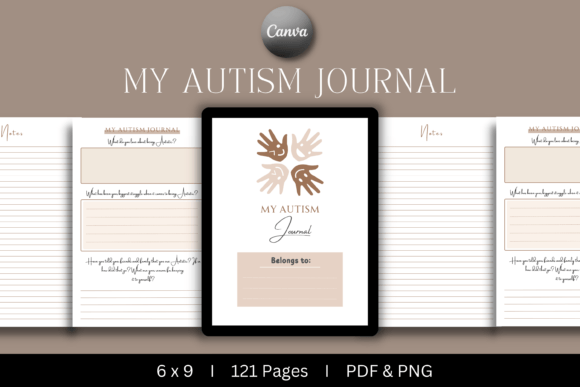
This is not a generic diary with a fresh cover. It is a 121-page print-ready PDF that includes a welcome page, main pages, and dedicated notes sections. You also receive a PNG file, an editable Canva template link (Pro account required), a PowerPoint file, and a 6x9 inch file with bleed. Every element is KDP-tested, meaning you can upload directly to Amazon with minimal friction. For someone who values both operational efficiency and long-term relevance, this product offers a rare combination of ready-to-use technical quality and deep emotional value.
Why a Thoughtfully Designed Journal Matters for Your KDP Strategy
The market for journals, planners, and guided notebooks is crowded. What separates a product that sells steadily from one that gets lost is the integrity of its design and the clarity of its purpose. My Autism Journal KDP Interior is built with a specific audience in mind: neurodivergent individuals and the people who support them. That specificity is not a limitation. It is a strategic advantage.
When you publish products that serve a real, defined need, you reduce the risk of being generic. You also increase the likelihood of word-of-mouth recommendations, repeat purchases from caregivers and educators, and higher customer satisfaction. The journal includes 100 original premium-quality interior designs. That is not decoration. It is a signal to buyers that the product has been crafted with care and intention.
From a business perspective, a product like this allows you to enter or expand within a niche that values authenticity and utility over flashy marketing. You are not promising transformation. You are providing a tool that helps someone document their experiences, track emotions, and communicate more effectively. That is a message that resonates with decision-makers, therapists, educators, and parents who are looking for practical resources.
Aligning Product Design with Real User Goals
Every page in this journal serves a purpose. The welcome page sets the tone. The main pages provide structure for daily or weekly reflection. The notes section offers flexibility for freeform ideas, observations, or questions. When you upload this to KDP, you are not just selling a file. You are offering a system that supports self-reflection, emotional regulation, and personal growth.
For the publisher, this means you can position the product not as a passive item but as an active tool. In your product description, you can emphasize how the layout reduces cognitive load, how the prompts encourage expression without pressure, and how the consistent format helps build a routine. These are concrete benefits that align with the goals of your target audience.
Consider a caregiver who uses this journal to track patterns in behavior, sleep, or mood. Over time, that documentation becomes a valuable resource for therapy sessions, school meetings, or medical appointments. The journal is not just a record. It is a communication bridge. That kind of utility earns trust and loyalty.
Practical Use Cases for Entrepreneurs, Educators, and Creators
If you are a publisher, you might be used to thinking in terms of categories, search rankings, and profit margins. That is necessary, but it is not sufficient. To build a catalog that holds up over time, you need products that people actually use and recommend. My Autism Journal KDP Interior fits into multiple realistic scenarios.
- Self-advocacy and daily reflection: An autistic adult can use the journal to document sensory experiences, social interactions, and personal wins. Over weeks and months, that record becomes a tool for understanding personal patterns and making informed decisions about routines, boundaries, and energy management.
- Caregiver and family communication: Parents or partners can use the journal as a shared space to note observations, questions, or affirmations. This reduces misunderstandings and creates a consistent reference point for discussions about well-being and support needs.
- Therapy and educational support: Therapists, social workers, and special education teachers can integrate the journal into their sessions or recommend it to families. The structured layout makes it easy to track progress, set goals, and revisit past entries for insight.
- Creative expression and skill building: For individuals who benefit from routine but also need outlets for creativity, the journal offers a balance of structure and freedom. The notes pages allow for drawing, list-making, or free writing alongside more guided entries.
Each of these use cases is grounded in real daily life. They are not aspirational. They are practical. And because the product comes with an editable Canva template and PowerPoint file, you can customize the interior if you choose to create variations for different audiences or purposes.
Strategic Planning Before You Publish
Before you upload My Autism Journal KDP Interior to Amazon, it is worth taking a deliberate approach to positioning and presentation. The quality of the file is only part of the equation. How you frame the product matters just as much.
Start by considering who will search for this type of journal. Caregivers may use terms like "autism journal for parents" or "sensory diary." Educators might look for "self-reflection workbook for neurodivergent students." Autistic adults might search for "daily log for autism" or "emotional tracking journal." Your product listing should speak directly to these needs without overpromising or using jargon that sounds clinical or detached.
Use the product description to explain not just what the journal contains, but how it can be used. Share a brief example of a typical page layout. Mention that the file is print-ready and KDP-tested, so buyers know they are getting a professional product. Include keywords naturally, without forcing them. The goal is clarity, not keyword density.
Also consider pricing strategy. A 121-page interior with original designs and multiple file formats offers substantial value. You can price it competitively within the journal niche while still maintaining healthy margins. Because the product targets a specific audience, you may also explore running ads using interest-based targeting focused on autism support, special education, and personal development.
Potential Risks of Using the Journal Without Clear Intent
No product is immune to misuse or poor results. My Autism Journal KDP Interior is most effective when it is used with intention. If a buyer purchases it without understanding why they need a journal, or without any plan for how to integrate it into their routine, the product may sit unused. That is not a flaw in the design. It is a mismatch between expectation and application.
As a publisher, you can mitigate this risk by being transparent in your listing. Do not claim that the journal alone will solve complex challenges. Instead, present it as a supportive tool that works best when combined with consistent use, clear goals, and, where appropriate, professional guidance. This kind of honest positioning aligns with E-E-A-T principles because it demonstrates experience and a realistic understanding of the product's role.
Another risk is assuming one format works for everyone. While the 6x9 inch size with bleed is a standard and practical choice, some users may prefer different layouts or more guided prompts. If you have the capacity, you can use the included Canva template to create variations. A version with more visual cues or simplified language could serve individuals who need lower cognitive demand. A version with expanded note sections might appeal to therapists or educators. The flexibility is there, but it requires you to invest time in customization.
Using the Journal Intentionally: Guidance for End Users and Publishers
If you are recommending or selling this product to others, encourage them to start small. Using a journal for the first time can feel overwhelming, especially for someone who has not found previous formats helpful. Suggest beginning with one entry per day or even a few times per week. The goal is consistency, not perfection.
For caregivers, a practical approach might be to sit with the individual and let them explore the journal at their own pace. Some pages can be used for drawing or writing single words. The structure should feel like support, not pressure. Over time, the journal often becomes a trusted space where thoughts and feelings are recorded without judgment.
For publishers, the long-term value of adding My Autism Journal KDP Interior to your catalog is about building a brand associated with meaningful resources. One product alone will not define you. But a collection of well-designed, purpose-driven tools signals to your audience that you understand their needs. That trust translates into repeat visits, cross-sales, and a stronger presence in the KDP marketplace.
You can also use this product as a foundation for a series. Consider companion journals focused on specific themes like sensory tracking, social skills, or goal setting. Because you have the editable templates, you can iterate quickly without starting from scratch each time. That is operational efficiency aligned with creative intention.
Long-Term Value and Decision-Making for Creators
When evaluating whether to add a product like this to your catalog, think beyond the first sale. The real value of My Autism Journal KDP Interior lies in its ability to serve a community that actively seeks resources designed for their specific experiences. Autism awareness and acceptance continue to grow, and with that growth comes demand for tools that are respectful, functional, and accessible.
By publishing this journal, you are not just filling a gap. You are contributing to a landscape where neurodivergent individuals and their families can find products that actually work for them. That is not a marketing angle. It is a genuine outcome of careful product development.
In practical terms, this product can generate steady passive income while also building goodwill. Customers who find genuine value in one of your products are more likely to explore your other offerings. If you build a catalog around similar themes—journals, planners, workbooks for specific needs—you create a cohesive brand identity that stands out in a sea of generic interiors.
From a decision-making standpoint, the key is to treat this product as part of a larger strategy rather than a standalone item. Pair it with clear product descriptions, honest customer communication, and a willingness to adapt based on feedback. The market for specialized journals is growing, but it rewards those who show up with quality and consistency.
My Autism Journal KDP Interior is more than a file. It is a resource for self-expression, a support for daily planning, and a tool for better understanding. For the publisher who approaches it with strategy and care, it offers a path to sustainable results. For the end user, it offers a space to be heard. That combination is rare, and it is worth pursuing.